
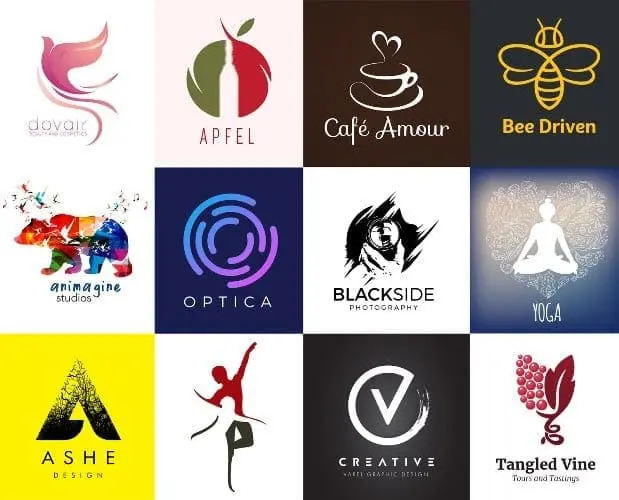
Logos are a classic and essential piece of branding. Regardless of your company type, your logo should be on message and communicate well with your audience. Your logo also needs to be memorable and unique.
But many elements come into play, and one of the most basic revolves around the design style you choose.
Depending on how you define them, there can be anywhere from five to twenty different logo styles — or even more if you incorporate more elements into the definitions!
But don’t stress out about the sheer number of options! Logo styles can be divided into basic categories, and understanding them will help you choose the best logotype for your brand.
Let’s talk about why.
What Your Logo Design Says About Your Company
As mentioned, creating an on-message logo is essential to ensure that your company’s values and personality can be understood from the visuals that represent it. In other words, if your brand personality is “edgy and unique,” you want an edgy and unique logo to match. If your brand promotes family values and creates a trustworthy atmosphere, then your logo should emphasize those. To make a logo that reflects your company’s message, consider what it believes in and how it acts. You can use the automatic writing feature on Papertyper.net to develop catchy phrases that represent your brand. This tool will help you create slogans that match your company’s values.
Yes, the message of your logo is greatly defined by the individual elements you choose, such as colors, font types, and graphics.
However, the overall style of the logo can also either emphasize the message or clash with it.
You can think of logo design styles the way you think of music genres. An individual song can be unique, but how you react to it will depend greatly on the genre it belongs to and your personal music preferences. Country songs have pretty calm lyrics and themes, and rap songs rarely are about pickup trucks and tractors.
But logos aren’t relatively as easy to define as music genres. So, how do you know ahead of time what message is sent by any given logo style and whether it melds with your brand?
Different Logo Styles And What They Mean
Here are seven different types of logos, including examples of each kind.
As was said earlier, you may encounter fewer — or far more — design types. But these are some basic guidelines; you can extrapolate information about other types of logos by analyzing these.
Icon or Symbol
A symbolic or iconic logo is a logo that uses a pictorial mark as its center focus. It’s primarily graphics-based, and the graphic is readily identifiable as a particular object.
The most famous examples of iconic or symbolic logos simply use that graphic image as the logo rather than accompanying the logo with typography. So, it can be difficult to establish your company using just an iconic logo; often, companies start with a combination mark (more on that later), and after reaching a certain level of fame, they can drop the typographic part of the logo and just stick to the icon.
This type of logo is excellent for companies that are well established in their branding rather than companies that are still finding their way. It requires you to think carefully about what icon or symbol best represents the brand because if you do it right, this logo will become synonymous with your brand.
Famous examples include Target, with its “target” symbol, and Apple, with its iconic “bitten apple” icon.
Black and White
A monochromatic logo can make a deep impression on the viewer. These logos are starker simply because they don’t use rich colors. Color can sometimes distract from a logo’s message, so it’s always good to check and see what your logo looks like when rendered in black and white.
Black-and-white logos are classy, eye-catching designs. They’re also a great way to include negative space in logo design, making the active and inactive portions of the design work together to create a dynamic logo design. Monochromatic logos tend to be simpler, which can also work well for the overall design, making them easier to print, more scalable, and even more memorable and striking.
Famous examples include the panda from the World Wildlife Fund and Gucci.
Emblematic
An emblem logo includes a shape such as a shield, crest, or banner. It often has text within that shape and sometimes an additional icon.
Emblem logos give gravity and respectability to a brand, often imbuing it with a sense of trustworthiness and tradition. Like certain automakers, you’ll see these logos used frequently in higher-end brands. But emblems are also famous for schools and incredibly popular for unique on-trend items, like craft breweries.
Famous examples include Harvard and Lamborghini.
Abstract
Abstract logos, like other types of logos on this list, are basically exactly what they sound like. Rather than using a readily identifiable pictorial symbol or icon for the focus, they use an abstract shape.
These types of logos can be difficult to pull off if your design isn’t completely on point. The design needs to be unique and not generic, and it also needs to have an on-brand flair and flavor, which can be hard to quantify with abstract shapes.
On the other hand, when done well, this is an excellent logo for a brand that emphasizes uniqueness and creativity.
Famous examples include Pepsi-Cola and the Nike swoosh.
Mascot
Everybody knows a mascot logo when they see one. Whether it’s an animal or a person explicitly created for the brand, mascot logos are designed to give the audience something to identify with.
If you want to make your customers connect with your brand on a personal level, increasing investment and engagement, a mascot logo could be the perfect solution. Of course, mascots are seen on sports teams worldwide, but they also pop up regularly at restaurants.
Famous examples include Red Robin’s Red Robin and Wendy’s Wendy’s.
Wordmark, Lettermark, and Monogram
These three types fall under the same primary category: logos that are focused on the typography element.
- Wordmark logos use an entire word, usually the name of the company.
- Lettermark logos use a single letter, usually the initial letter of the company name.
- Monograms use the initial letters of each proper name in the company name, usually three or four.
Typographic logos can also be very impressive, though care should be taken when choosing your font. You don’t want a font that is overly eccentric or difficult to read; at the same time, you don’t want to choose something boring that will blend in with everything around it, either.
Monograms and letter marks are great for companies with more words in their name, allowing you to shorten the branding to a manageable level, and wordmarks are perfect for companies with a single shorter word in their name.
Examples range from things like NASA to Disney.
Combination Mark
A combination mark logo combines two or more different logo styles. Usually, this includes a graphic element and a typographic element, but it can also include emblems.
If your company is starting up, this is your recommendation. It gives you the chance to tie your graphic elements together with your company name and ensures that your logo’s message stays on point.
As your brand and reputation grow, you may update the logo and turn it into a single type, such as an iconic logo.
Excellent examples can be found among carmakers, such as BMW and Volkswagen.
How To Choose A Logo Style
When it comes to choosing a logo style, it’s important to consider all factors.
- What does this style inherently say about my brand?
- Will my other design choices work with this logo style, or will they clash?
- Is my brand at the point where this logo style will do it justice?
- Can I update my logo as my brand continues to grow?
And if you are pressed for time and don’t know where to start, you can always work with a professional graphic designer like PXMedia to get a bearing on your brand image.
The short rundowns in this article should give you a good idea of the message each logo design style conveys.
So, which style will work for your brand? The decision is up to you!
Author Biography
Betty Shane is a professional blogger for multiple websites. Her work as a freelance content writer allows her to explore diverse topics, including digital marketing, business, and design.
Frequently Asked Questions
Why is it important to understand different logo design styles?
Understanding logo styles helps you choose the one that aligns with your brand personality and communicates the right message to your target audience.
What are the most common logo design styles?
Common styles include minimalist, vintage, typographic, emblem, abstract, and illustrative. Each style suits different industries and brand tones.
How does a logo style influence brand perception?
A logo style affects how customers emotionally respond to your brand. For example, a modern minimalist logo may convey innovation, while a vintage design may suggest tradition and trust.
Can different industries benefit from specific logo styles?
Yes, industries often have visual expectations. For instance, tech companies may lean towards clean, modern logos, while craft breweries may prefer vintage or illustrative styles.
How do I choose the right logo style for my business?
Consider your brand values, target audience, and industry trends. Working with a professional designer ensures the chosen style represents your identity effectively.
Does the style of a logo impact its scalability and usability?
Absolutely. Simple styles often scale better across various platforms, while complex illustrations may lose clarity when resized.
Should logo styles be trendy or timeless?
A timeless logo style is generally preferable as it ensures longevity, but incorporating subtle trends can keep your design fresh and relevant.
How do color choices interact with logo styles?
Colors enhance the emotional appeal of your logo style. Bold colors may amplify a modern style, while muted tones may complement a vintage look.
Can a brand evolve its logo style over time?
Yes, brands often refresh their logos to reflect growth, modernize their image, or align with new market positions while still maintaining core identity.
What’s the role of typography in logo design styles?
Typography is crucial, especially in wordmarks or typographic logos. The font choice must align with your brand tone be it professional, playful, or luxurious.
Turn The Importance of Understanding Logo Design Styles into a clearer next step
The Importance of Understanding Logo Design Styles becomes more useful when the takeaway is connected to web design company support, website clarity, and measurable lead quality. PX Media can turn The Importance of Understanding Logo Design Styles into a practical review of layout, navigation, forms, calls to action, speed, mobile experience, content clarity, and tracking so the next move supports the business instead of adding more noise.
Custom Website Design
The Importance of Understanding Logo Design Styles pairs well with Custom Website Design when you want a clearer next move before changing campaigns, design, or measurement.
Pasadena Web Design Company
Pasadena Web Design Company gives The Importance of Understanding Logo Design Styles a stronger follow-through path for planning, service review, and practical action.
Local Digital Marketing Agency
Local Digital Marketing Agency can connect the ideas around The Importance of Understanding Logo Design Styles with a more focused service conversation.
Blog & Press
The Importance of Understanding Logo Design Styles often leads into Blog & Press when the goal is better clarity, cleaner tracking, or stronger lead quality.
Talk To Us
Talk To Us can help turn the takeaways from The Importance of Understanding Logo Design Styles into a more specific plan for your business.
Questions that come up after The Importance of Understanding Logo Design Styles
How does The Importance of Understanding Logo Design Styles fit into a practical web design company support plan?
The Importance of Understanding Logo Design Styles can help clarify where web design company support needs more attention, especially around content hierarchy, mobile usability, speed, conversion flow, and clear service messaging. With The Importance of Understanding Logo Design Styles as the starting point, PX Media shapes next steps that are easier to measure and easier for visitors to act on.
What should a business review before acting on The Importance of Understanding Logo Design Styles?
Before making changes after The Importance of Understanding Logo Design Styles, it helps to review layout, navigation, forms, calls to action, speed, mobile experience, content clarity, and tracking. That keeps decisions around The Importance of Understanding Logo Design Styles grounded in real visitor behavior, lead quality, and the business outcome that matters most.
When is it worth asking PX Media for help after The Importance of Understanding Logo Design Styles?
It is worth asking for help when the issue behind The Importance of Understanding Logo Design Styles feels scattered, hard to measure, or disconnected from qualified inquiries. PX Media can review the current setup and help turn The Importance of Understanding Logo Design Styles into a clearer action plan.
Need help applying The Importance of Understanding Logo Design Styles?
PX Media can review the current setup behind The Importance of Understanding Logo Design Styles, clarify the strongest opportunity, and connect web design company support with a cleaner plan for visibility, conversion, and follow-up.